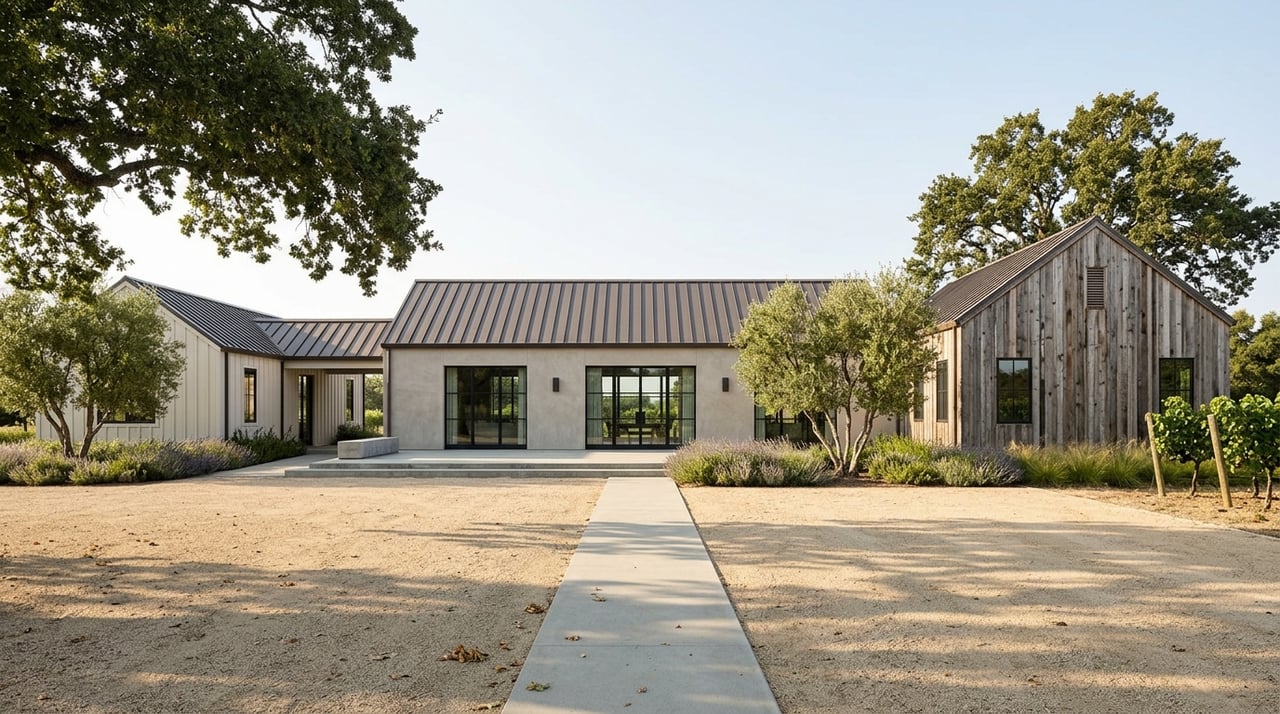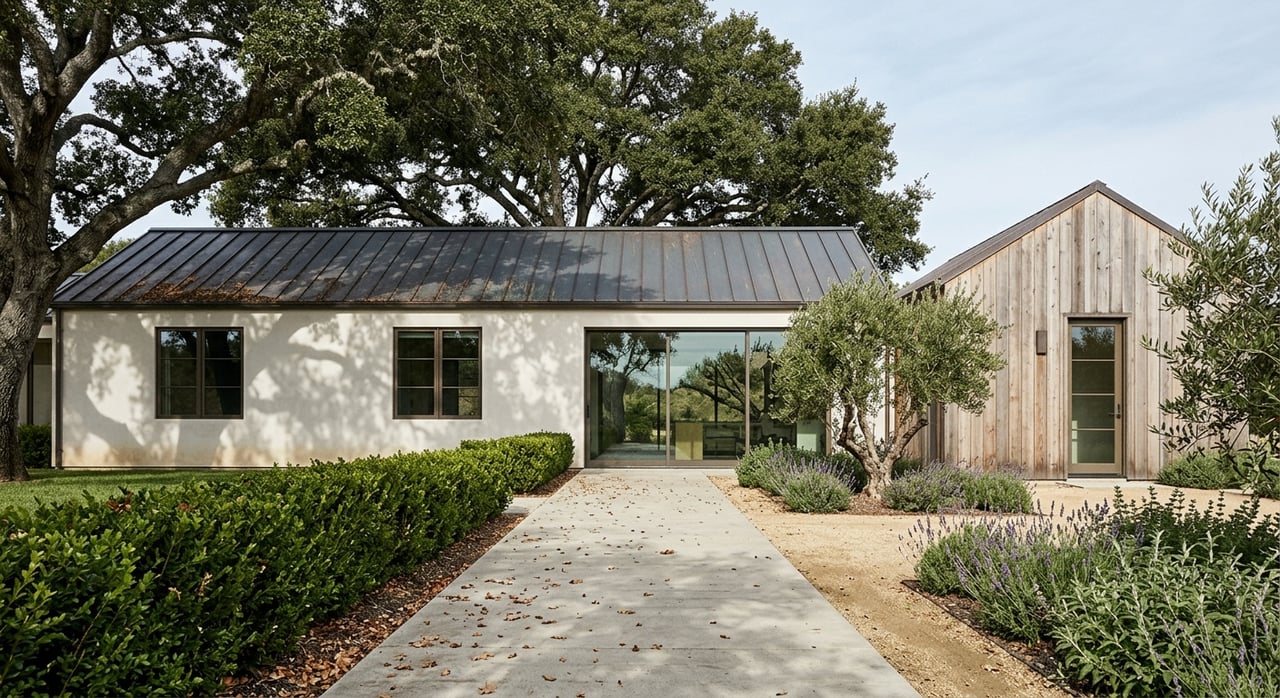
Kenwood Estate Buyer Guide for Choosing the Right Parcel
July 16, 2026
July 16, 2026
If you are considering an estate purchase in Kenwood, the home itself is only part of the equation. In this stretch of Sonoma Valley, the real decision often comes down to how land, privacy, access, and daily livability come together on a specific parcel. The right property can feel effortless, but only if you understand what sits beyond the gate. This guide walks you through what savvy buyers tend to weigh before choosing Kenwood. Let’s dive in.
Kenwood sits at the northern end of Sonoma Valley along Highway 12, between Santa Rosa and Sonoma. Sonoma County Tourism describes it as a small village of about 1,000 residents with a laid-back, rural feel compared with larger nearby towns. For many estate buyers, that balance is the appeal.
You are not just buying square footage here. You are choosing a setting shaped by open space, vineyard country, and proximity to tasting rooms, parks, and scenic roads. In Kenwood, the value of a property often depends as much on its parcel and surroundings as the residence itself.
In Kenwood, two estates that look similar online can live very differently in person. One may sit close to Highway 12 with easy access to village conveniences and winery destinations. Another may feel more secluded, set back on quieter roads with a stronger sense of privacy.
That is why experienced buyers spend time evaluating the land itself. Views, topography, road exposure, and how a home sits within the parcel can shape your day-to-day experience just as much as finishes or architecture.
The village is organized around Highway 12, also called Sonoma Highway, with side roads including Warm Springs Road, Adobe Canyon Road, Los Guilicos Road, North Pythian Road, Shaw Avenue, and Griswold Avenue. The 2026 Kenwood map also places a number of tasting rooms and hospitality uses along this corridor and nearby side streets.
If a parcel sits close to winery clusters or the highway spine, you may gain convenience and broad valley access. You may also notice more weekend traffic, ride-share drop-offs, occasional parking spillover, and event-related activity than you would on a more tucked-away site.
This is one of the most important tradeoffs in Kenwood. Some buyers want to be close to tasting rooms, restaurants, and the main village rhythm. Others want a retreat that feels removed from activity, even if that means more driving for everyday outings.
Neither choice is inherently better. The question is which version of Kenwood fits how you want to live, entertain, and use the property over time.
Kenwood’s outdoor setting is a major part of its long-term appeal. Sugarloaf Ridge State Park, located at 2605 Adobe Canyon Road, offers 25 miles of trails, access to Bald Mountain, and the Robert Ferguson Observatory. Day-use hours run from 6 a.m. to 10 p.m.
Nearby, Jack London State Historic Park in Glen Ellen spans 1,400 acres and includes more than 26 miles of trails. Sonoma County Regional Parks also identifies Kenwood Plaza Park and Shaw Park in Kenwood, plus Sonoma Valley Regional Park in Glen Ellen. Hood Mountain Regional Park is contiguous with Sugarloaf near Kenwood.
For many buyers, this access adds real value. It supports a lifestyle built around hiking, open space, and a connection to the landscape, not just scenic views from the house.
The Sonoma Valley Trail is a planning project that Sonoma County Regional Parks says would connect Sonoma, the Springs area, Glen Ellen, Kenwood, and Santa Rosa. The concept also includes links to businesses, wineries, schools, and parks.
It is worth knowing about as part of a long-range view of the area. Still, savvy buyers should treat it as a planning initiative, not as a finished amenity.
Kenwood is not a one-size-fits-all market. Parcel reports show that properties can differ meaningfully in zoning, wildfire designation, groundwater considerations, and land-use constraints, even when they appear similar from the road.
For example, Permit Sonoma records show one Kenwood parcel with RR zoning, a 2.12-acre lot, Moderate wildfire hazard designation, local responsibility area status, groundwater basin information, and a public-trust review area. Another Kenwood property involved a transient vacation-rental zoning permit in DA zoning and referenced a Williamson Act contract. The lesson is simple: every estate deserves parcel-specific review.
Before you get too far into the process, review the parcel report alongside the marketing materials. Buyers should confirm:
This helps you understand whether a property functions purely as a residential estate, an agricultural parcel, or something in between.
Estate buyers often imagine future flexibility, such as adding a guest structure, planting vines, or upgrading access. In Kenwood, those plans may depend on zoning, water standards, permit history, and site conditions.
That is why experienced buyers verify what is allowed before they underwrite a lifestyle vision into the purchase decision.
Some of the most important due diligence in Kenwood involves how the land can be used over time. These questions are especially important for multi-acre parcels, vineyard-capable sites, and properties with existing outbuildings or operational history.
Sonoma County’s ADU ordinance applies across multiple agricultural and residential zones, including LIA, LEA, DA, RRD, AR, RR, R1, R2, and R3. The county says ADUs are ministerially permitted if standards are met.
That said, you still need compliance with the underlying zoning district and potable-water standards. The county also prohibits separate sale or subdivision of the ADU, which matters if you are thinking in terms of future estate planning or parcel strategy.
If you are considering agricultural use, Sonoma County’s VESCO ordinance governs new vineyard and orchard development, replanting, and related grading and drainage work. The county’s 2024 crop report says these projects are reviewed before planting or replanting.
Depending on the site, the application process can require mapping, biological review, and engineered erosion-control or drainage materials. In other words, a beautiful field does not automatically translate into a simple vineyard project.
Private water and wastewater systems are central to many rural estates in this area. Permit Sonoma’s well-ordinance update took effect on May 18, 2023, and the county says wells in a Public Trust Review Area must be evaluated for potential impacts to public-trust resources.
Sonoma County also maintains septic and OWTS permit datasets, reflecting how important these systems are in rural property review. If you are buying in Kenwood, understanding well status, septic history, and upgrade needs should be part of your core diligence.
Road access is a parcel-by-parcel issue. Permit Sonoma’s base-map legend distinguishes Unimproved Access, Fire Road, Paved Driveway, and Unimproved Driveway.
That can affect convenience, construction planning, emergency access, and overall use of the property. If future work touches the county right-of-way, such as a driveway apron or utility line installation, an encroachment permit may also be required.
Kenwood is in the heart of Sonoma Valley’s wine-country corridor, and Sonoma County Tourism notes there are more than a dozen wineries in and around the area. For many buyers, that is a major part of the appeal.
Still, if a property is near a winery or tasting-room corridor, it is wise to ask what the current use permit actually allows. Sonoma County planning materials indicate winery events are secondary to agricultural production and may be limited by hours, event counts, and parking rules.
Event authorization must be explicit in the use permit. County materials also state that parking along public roadways is not allowed.
That means a neighboring property may have an established winery presence without having unlimited event activity. Reviewing the actual permit framework can help you better understand the rhythm and intensity of nearby operations.
A Kenwood estate can offer privacy, scenery, and a strong connection to the land. It can also place you in an active agricultural environment.
Sonoma County disclosure language states that properties near agricultural land may experience noise, odors, fumes, dust, smoke, insects, machinery at any time of day or night, and fertilizer or pesticide applications. The county also says inconvenience from a properly conducted agricultural operation is not considered a nuisance under its right-to-farm framework.
For estate buyers, that does not diminish the appeal of Kenwood. It simply means the quietest-looking property may still be part of a working landscape.
Wildfire risk is an important part of estate buying in rural Sonoma County. CAL FIRE’s Sonoma County fire-hazard map classifies areas as Moderate, High, or Very High.
Sonoma County ordinances also require defensible-space compliance in the unincorporated area. The county further states that a Fire Protection Plan is required for any new residential or commercial building in a State Responsibility Area high or very high severity zone, based on a site-specific wildfire risk assessment.
A practical review should include:
For many buyers, wildfire diligence is not just a compliance issue. It is part of understanding the true operating profile of the estate.
The right estate in Kenwood is rarely defined by one feature alone. It is usually a combination of privacy, views, access, land utility, and comfort with the realities of a rural wine-country setting.
Some buyers are drawn to the activity edge of the corridor, where wineries, village services, and scenic routes are close at hand. Others prefer a more tucked-away parcel that prioritizes quiet and separation from the main spine.
If you are weighing an estate purchase in Kenwood, careful parcel review can help you choose with confidence. For discreet, senior-led guidance on Sonoma Valley land and estate opportunities, The Goldman Gray Group can help you evaluate both the property and the setting behind it.
Stay up to date on the latest real estate trends.